Skip to content
Explore South Carolina
Exploring the towns and history of South Carolina
Menu
Home
About
Donate and Support Us
Research Resources
Submit Leads
×
Search for:
Tag:
nrhp
Posted in
Instagram
The Glenn Springs Post Office was built ca. 1900. In 1827, John B. Glenn purchased a 723-acre tract of land that contained waters orginally called Sulfur Spring. The Glenn Springs Company purchased the land from Glenn in 1837 and was granted a charter. The town thrived until the invention of the gasoline car and modern roads, at which time the town declined as a prestigious place to vacation
Posted in
Horry County
Instagram
The Atlantic Coast Railroad Depot was constructed in 1928. The rail line started as the Wilmington, Chadborn, and Conway Railroad with a second rail line, the Conway Coast and Western Railroad, was built in 1896. The two interconnected in 1904 was purchased by the Atlantic Coast Line in 1912
Posted in
Instagram
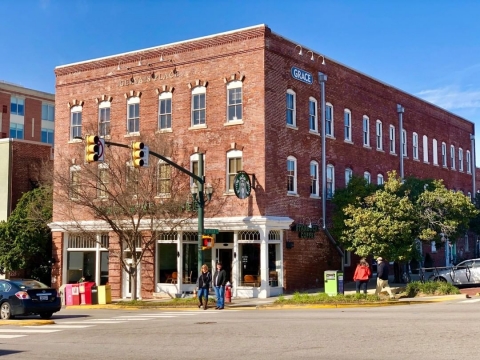
The J. E. Young and Company Wholesale Fruit and Produce Company building was built in 1907. The building purportedly had the first to have a cold storage unit installed in Columbia
Posted in
Instagram
Laurens County
The Brown Franklin Building
Posted in
Instagram
Orangeburg County
This molded concrete building was built in 1920. It later became the home of the First National Bank of Orangeburg. FNB of Orangeburg was established in 1933 and later became known as South Carolina Bank and Trust and then South State Bank
Posted in
Instagram
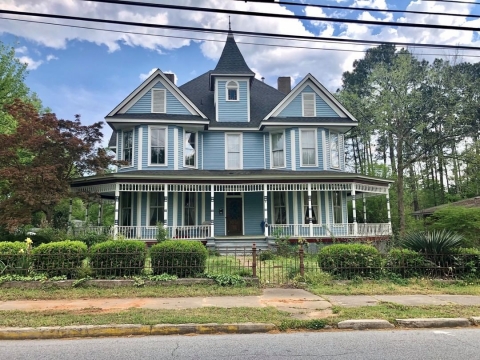
This two-story frame house in Union was built ca. 1900. The home features a central three-story tower with twin gabled pavilions flanking its central tower
Posted in
Instagram
York County
First National Bank of Sharon
Posted in
Instagram
Newberry County
The Hope Rosenwald School was built in ca. 1926. The school was named for James Haskell Hope, the South Carolina Superintendent of Education from 1922 to 1945, because he sold more than 2 acres of his land for the “gift-like’ price of $5 to the Trustees of School District No. 60 for Newberry County, South Carolina in 1925
Posted in
Anderson County
Instagram
This building in Anderson was built ca. 1890. This building has served as the home to many businesses during its 130 years
Posted in
Edgefield County
Instagram
The Carnoosie House was originally built by M. Lebeschultz in 1860. In 1884, the home was purchased by John Calhoun Sheppard, who would become Governor of South Carolina in 1886. His son, James Orlando Sheppard would become Lieutenant Governor of South Carolina during the 1920s, also lived here until his death. The name “Carnoosie” is reputed to be a Cherokee word for cornfield, but it is unclear why and when the name was first applied to this house
Posts navigation
← Older posts
Newer posts →
Tollefson Research
Design by ThemesDNA.com
Scroll to Top